
Goals, Gardens, and Growth: Your Blueprint for a Purpose-Driven Life
Have you ever started the year with big goals, only to lose momentum a few weeks or months int the year? You’re not alone. Whether it’s expanding your garden, working to improve a relationship, or finally launching that passion project, success comes down to intentional planning. The secret? Breaking goals into smaller, achievable steps and tracking your progress along the way. Achieving the lifestyle you desire doesn’t just happen by chance—it happens by design. In this post, I’ll share my method for setting annual, quarterly, monthly, and even daily goals—so you can make real, measurable progress without feeling overwhelmed.

Goals help whatever you are doing move forward more quickly. As Benjamin Franklin said, “By failing to prepare (plan), you are preparing (planning) to fail”. I have found this to be incredibly true in all areas of life. I begin the year by deciding on one or two, maybe as many as three, major goals in the different areas of my life. If I have several goals that I would like to accomplish in a specific area, I want to make sure I can accomplish what I start, so I will pick two or three and table the rest for next year or two. It is really easy to come up with several for many different areas of my life, but I choose the most important ones to do this year and make a note of future ones.
I start with a 5-year plan and break it down. Create a Big-Picture Vision and then break it into annual goals. I will use my small farm as an example of how I do that. My plans are: create a large, in-ground garden area with an automatic irrigating/water/sprinkler system, create a square raised bed with a drip line (in addition to the raised beds I have), plant 3 more trees in the orchard, put a permaculture area around all trees with beneficials for the orchard trees, bees, chickens, and the apothecary, create a drainage path from the pasture to the road, move the bee apiary to a location that is away from the yard sprinkler system, build two secure chicken tractors for the meat birds, build a safe area for weanling lambs, build a chicken brooder for each side of the large coop, create maintenance-free paths between the orchard, apiary, chicken coops/yards, and gardens.
Obviously, with all the other time demands in life, this is too much to do in one spring/summer/fall, so I will decide which ones will be done each year for the next 3-5 years.
Once the annual goals are made for each area of my life, I then work out the steps for each annual goal and put those in the appropriate month, creating monthly goals. From there, those steps can be put into the appropriate weeks, and days. Experience has shown me that things come up, things take longer to accomplish that planned, and life happens, so I also factor in ‘spare’ time.Be clear, be confident and don’t overthink it. The beauty of your story is that it’s going to continue to evolve and your site can evolve with it. Your goal should be to make it feel right for right now. Later will take care of itself. It always does.
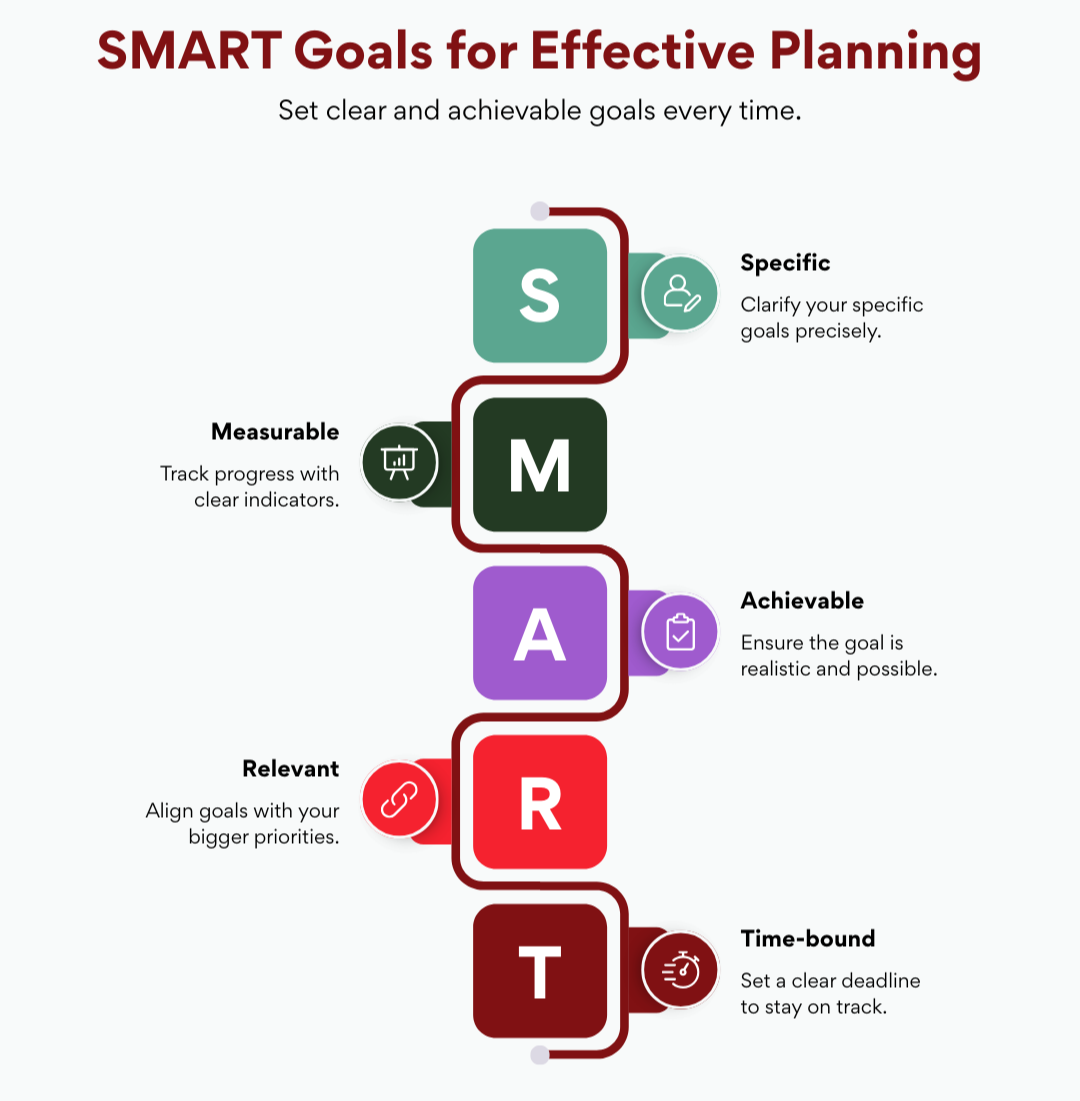
Turning dreams into reality starts with a solid plan—SMART goals give you the clarity, structure, and motivation to make it happen!
SMART goals are a structured and effective way to set and achieve objectives by ensuring they are clear, actionable, and measurable. SMART stands for:
S – Specific 🎯
Your goal should be clear and detailed, answering who, what, where, when, and why.
Example: Instead of saying, “I want a bigger garden,” say, “I will add a 20x20 ft garden bed with an automated watering system by May.”
M – Measurable 📏
You need a way to track progress and success.
Example: “Harvest 50 pounds of tomatoes this season” instead of “Grow a lot of tomatoes.”
A – Achievable ✅
Goals should stretch your abilities but still be realistic based on your time, resources, and skills.
Example: “Write and publish 2 blog posts per month” instead of “Post daily on my blog.”
R – Relevant 🎯
The goal should align with your bigger vision and priorities.
Example: “Develop a chicken tractor for easier management of meat birds” is relevant if raising chickens efficiently is important to your farm goals.
T – Time-Bound ⏳
Set a deadline or timeline to stay accountable.
Example: “Complete the chicken tractor by April 1st before my meat birds arrive.”
Benefits of SMART Goals
✅ Clarity & Focus: Eliminates vague ideas and makes goals clear and actionable.
✅ Motivation & Direction: Provides a roadmap to success with a defined end goal.
✅ Better Time Management: Helps prioritize tasks and avoid procrastination.
✅ Easier Progress Tracking: Allows you to measure progress and make adjustments.
✅ Increased Success Rate: Goals are realistic and achievable, reducing frustration.
Tools
There are many tools that can be used to implement your goals. Stay tuned for many tools that an be very helpful and useful.